
2025 Q4 Market Report
by Desmond Ng • 26 March 2026
The Bottom Line Up Front
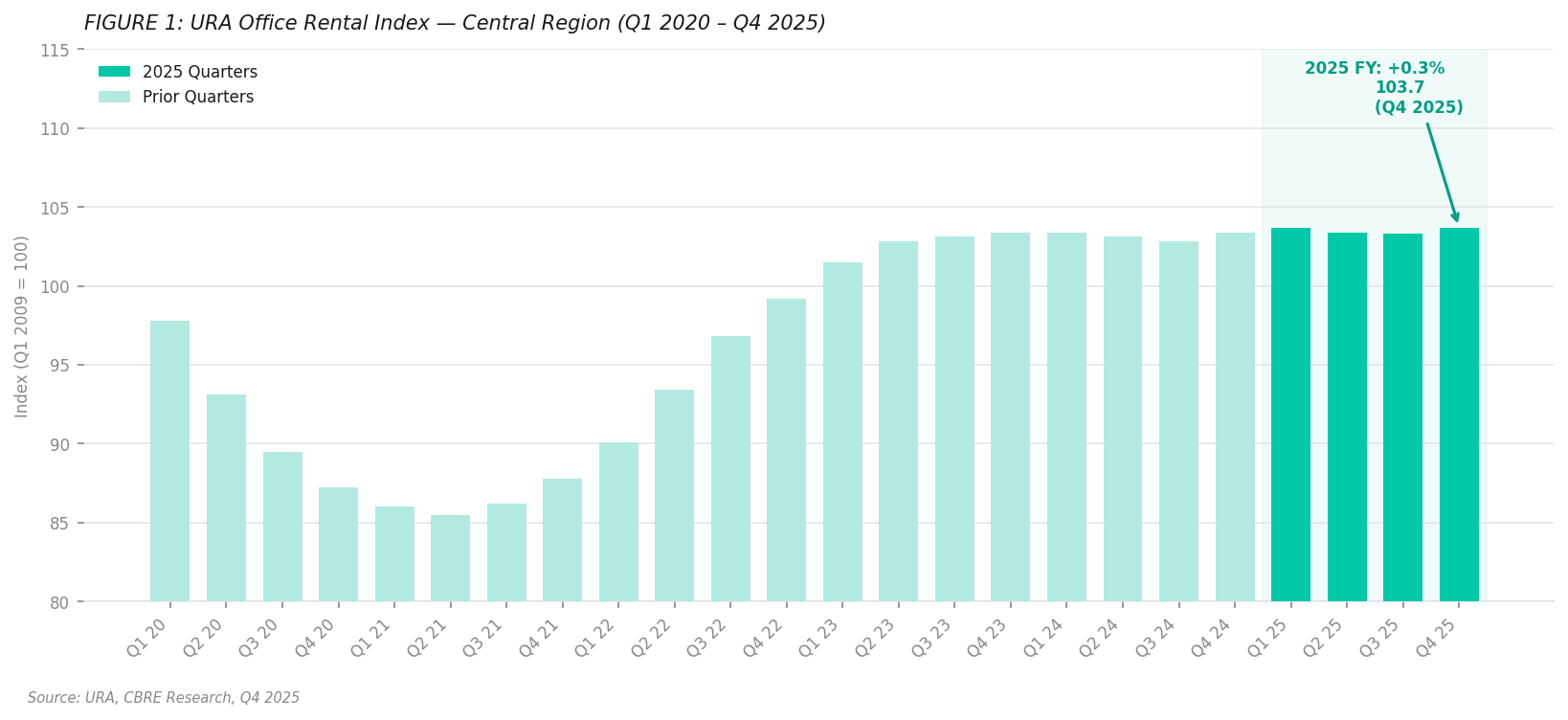
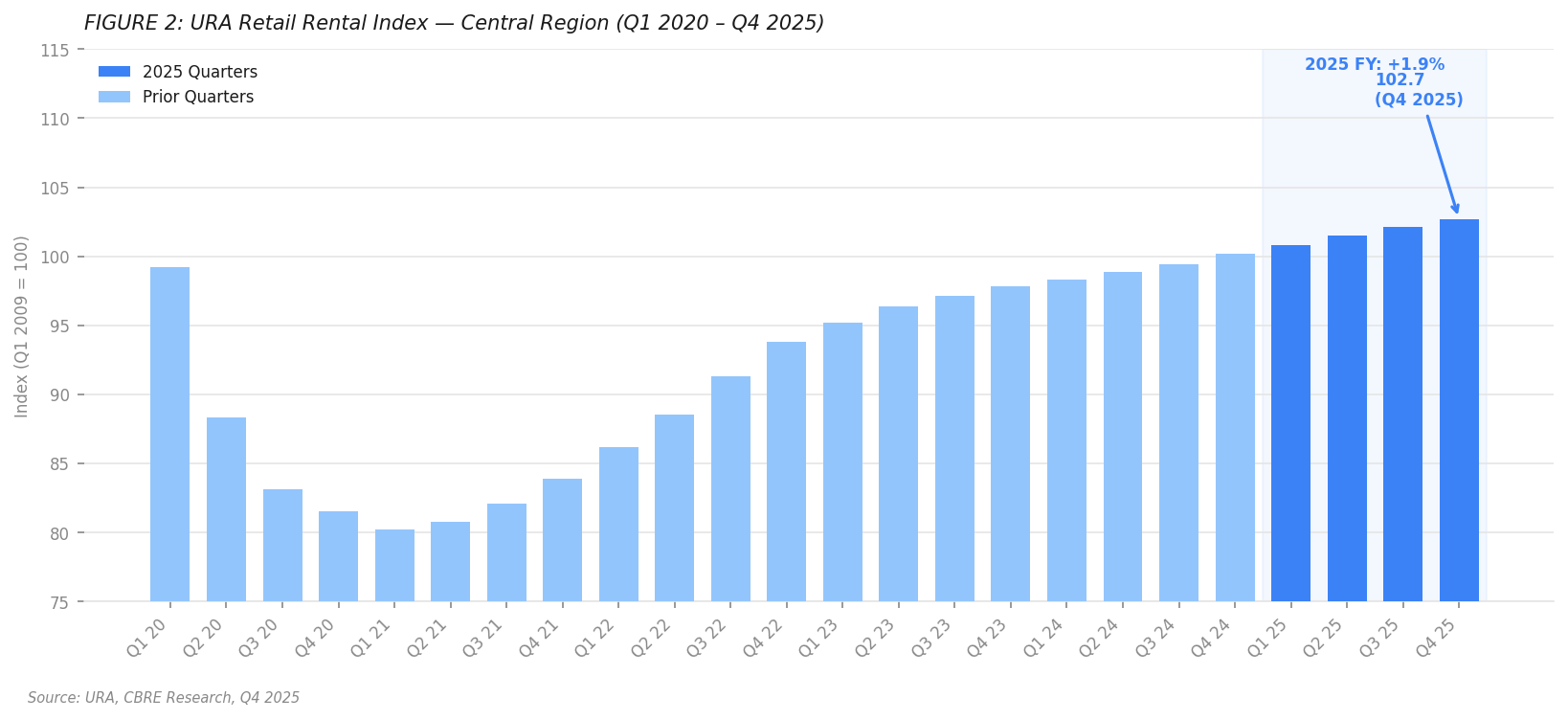
Singapore's commercial property market closed 2025 with quiet confidence. Strong economic fundamentals and a shrinking supply pipeline drove consistent rental growth across key sectors. According to official URA data, the Central Region office rental index edged up 0.3% for the full year, while retail rents outperformed with a robust 1.9% gain. Core CBD Grade A office rents tracked even higher, rising 2.9% as the flight-to-quality trend accelerated.
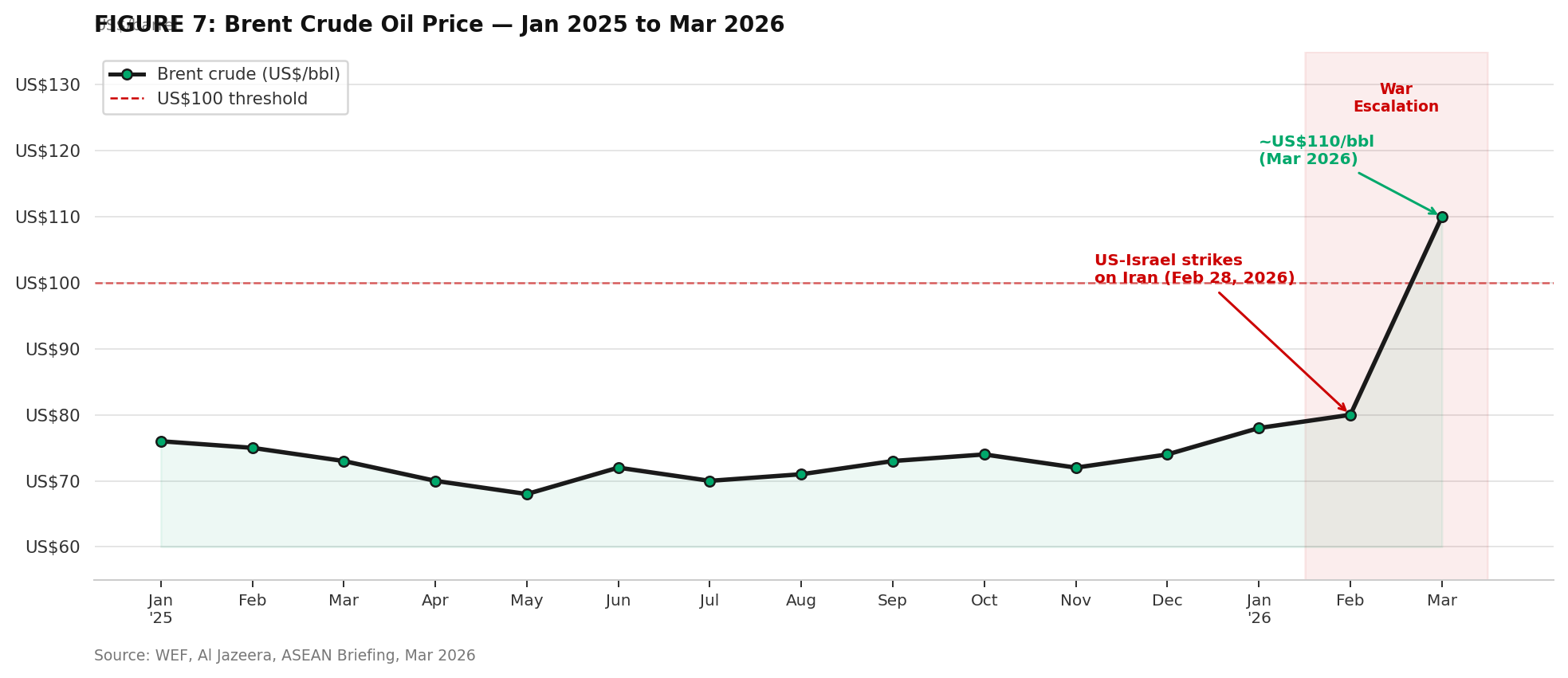
However, the landscape has shifted materially since late February 2026. The escalation of the Middle East conflict, with US-Israeli strikes on Iran triggering a Strait of Hormuz crisis, has sent Brent crude surging past US$110 per barrel, rekindled inflation fears, and introduced a new layer of uncertainty that every commercial property stakeholder in Singapore must now factor into their planning.
A City That Keeps Its Footing
Singapore's economy expanded an estimated 4.8% in 2025, providing a firm anchor for the commercial property sector. The overall office vacancy rate tightened from a peak of 14.2% in 2021 down to 11.1% islandwide by Q4 2025, reflecting healthy occupier demand despite a cautious business environment. The market is clearly two-tiered: modern, ESG-compliant buildings in prime locations are thriving, while older assets face growing pressure to upgrade or reposition.
Singapore Maintains Its Competitive Edge
| Driver | What It Means |
|---|---|
| Flight-to-Quality | Occupiers are upgrading to premium, sustainable premises to attract talent — accelerating demand for Grade A, ESG-compliant office space. |
| Economic Resilience | 4.8% GDP growth in 2025 reinforces Singapore as a reliable long-term base for regional headquarters and business expansion. |
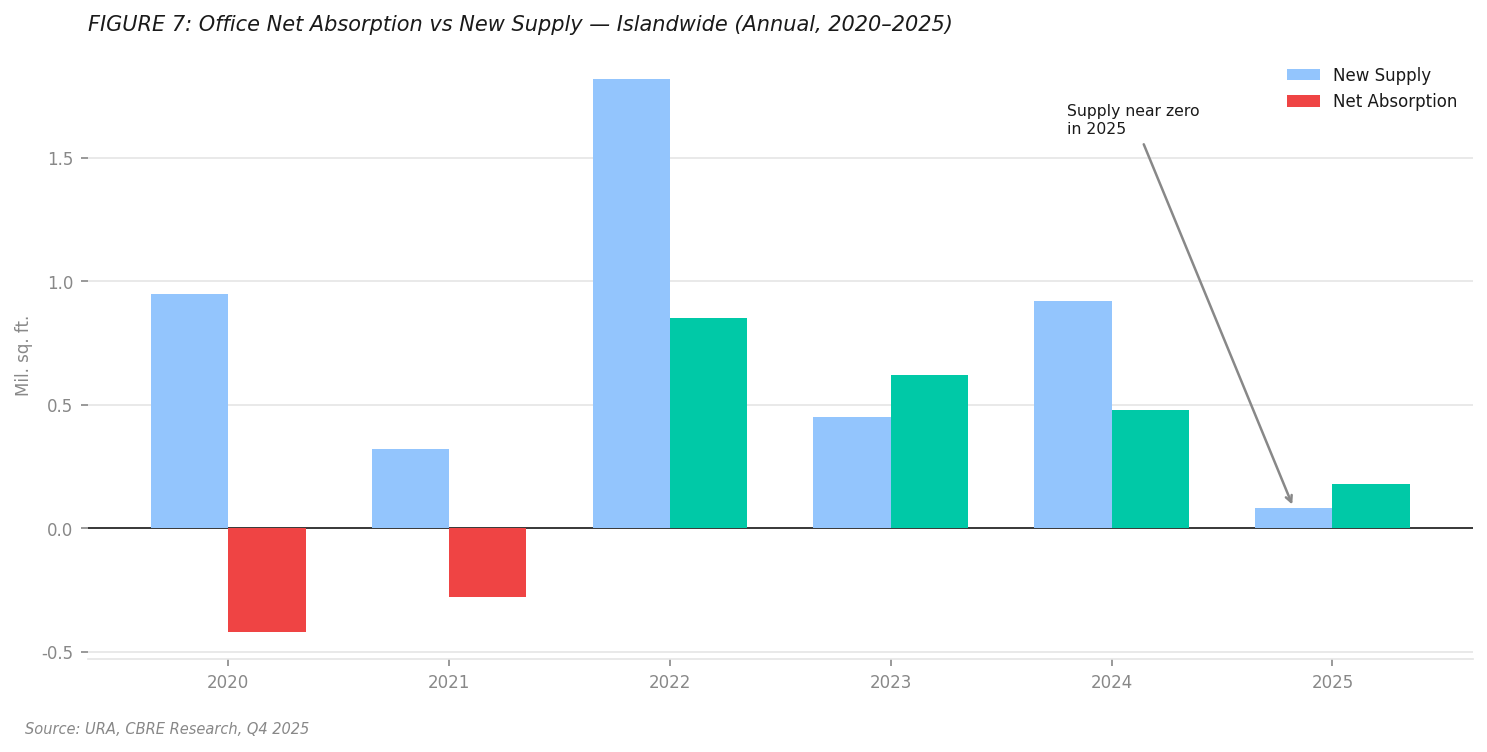
| Tight Supply | Office net supply was near zero in 2025 (0.08 mil sq ft per URA), constraining future options and keeping the market landlord-favourable through 2027. |
| Price Softening | The URA Office Price Index fell 2.1% in 2025, improving yields for investors and creating a rare positive-carry environment in prime CBD assets. |
Where the Action Is: Sector by Sector
Office • The Star of the Show
While the broader URA Central Region index showed modest 0.3% growth, the premium segment outperformed. Core CBD Grade A rents rose 2.9% for the full year, with vacancy in key submarkets falling sharply. Notably, the Marina Bay precinct saw vacancy plummet by 3.6 percentage points to just 4.2% by year-end, driven by the successful absorption of IOI Central Boulevard Towers and Marina One.
Retail • Back Above Pre-Pandemic Highs
Retail was the surprise outperformer of 2025. The URA Retail Rental Index for the Central Region rose 1.9% for the full year, while the Retail Price Index accelerated to 3.0% growth. Islandwide prime rents surpassed pre-COVID levels for the first time. The recovery was bifurcated: Outside Central Region (OCR) vacancy tightened to 4.4% on the back of new suburban mall absorption, while Orchard Road saw slight softening to 6.6% due to transitional vacancies.
Capital Follows Confidence
Singapore continues to attract significant foreign capital. Private real estate investment volumes rose 10.8% year-on-year in 2025. The largest single deal of the year , a 33.3% stake in MBFC Tower 3 transacted at S$1.453 billion , underscores deep investor confidence in prime assets. New market entrants, including international software and digital marketing firms, also established their first Singapore offices during Q4, reinforcing the city-state's role as a regional launchpad.
The Headwinds Worth Watching
• Global turbulence: Geopolitical tensions, trade frictions, and slowing global growth remain the key risks to business confidence.
• Rising costs: Retailers and industrial occupiers face elevated operating costs and manpower constraints.
• Space crunch: Large occupiers are finding it increasingly difficult to secure contiguous Grade A floor plates in the core CBD, pushing many to renew rather than relocate.
Fire in the Gulf: What the Middle East War Means for Regional Real Estate
On February 28, 2026, US and Israeli forces launched joint strikes on Iran, triggering a rapid escalation that has fundamentally altered the global energy landscape. The Strait of Hormuz , through which approximately 20 million barrels of crude oil and one-fifth of global LNG pass daily , has been severely disrupted. Brent crude surged from around US$80 per barrel in early February to over US$110 by mid-March 2026.
This is not merely an oil story. It is a structural shock to global supply chains, inflation dynamics, and investment confidence , all of which have direct implications for commercial real estate across Asia and Singapore.
Resilience Amid Inflation and Interest Rate Pressures
Singapore's exposure to this crisis is real, though its structural position provides meaningful insulation. The city-state imports more than 95% of its energy requirements, with natural gas accounting for 93% of its electricity fuel mix. Wholesale electricity prices in Singapore rose approximately 20% in the third week of March 2026 compared to pre-conflict levels.
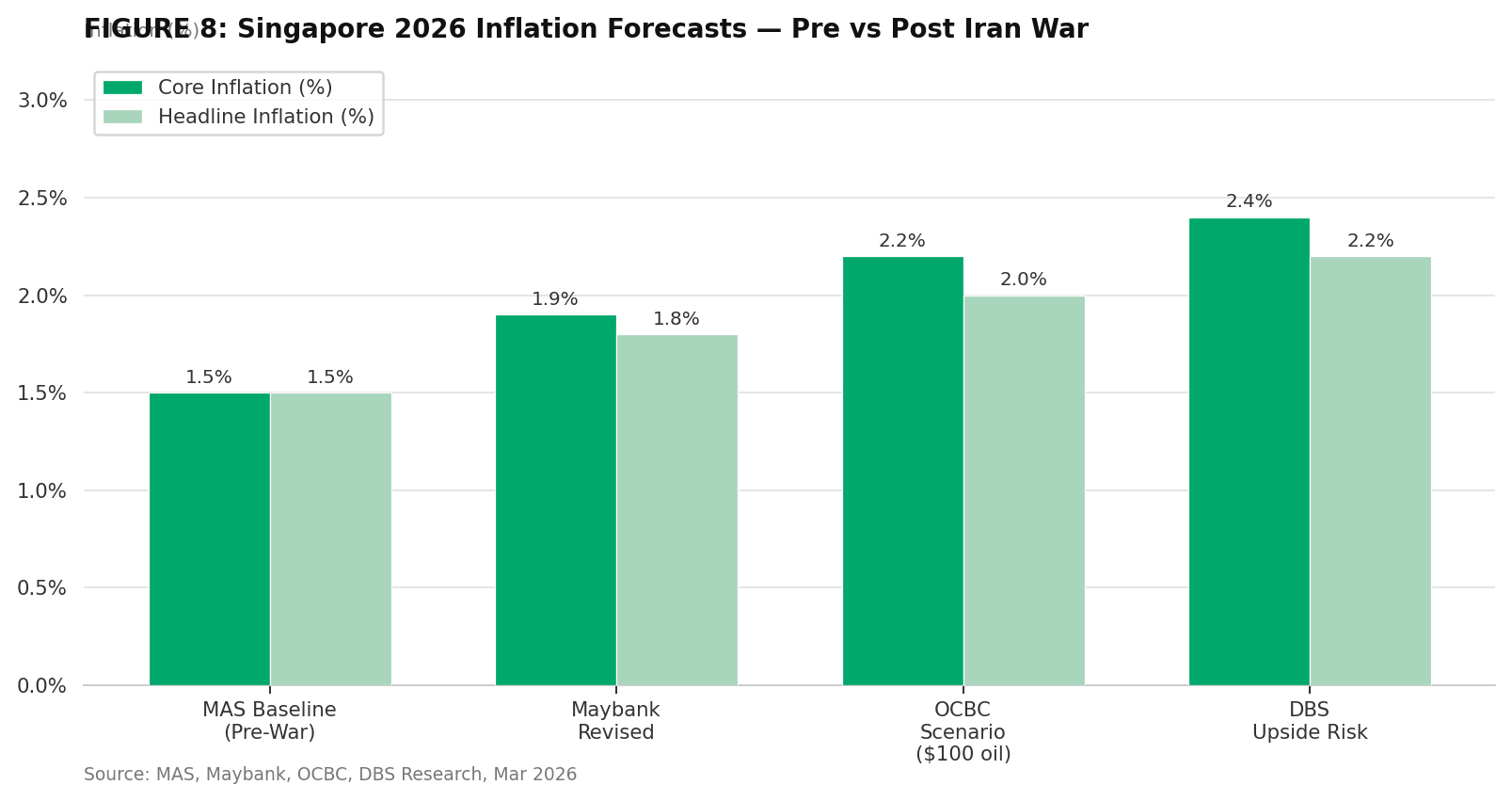
The Monetary Authority of Singapore (MAS) has signalled it will update its inflation outlook in April 2026. Core inflation is expected to climb further as energy costs pass through to transport, freight, and utilities.
For commercial property specifically, the implications are nuanced. On the demand side, occupiers facing higher operating costs may become more selective, favouring energy-efficient, green-certified buildings that offer lower utility bills , accelerating the already-evident flight-to-quality trend. On the supply side, higher fuel and logistics costs will raise construction expenses, further constraining the new development pipeline.
Sector-Level Risk Overview
The Middle East shock does not affect all commercial property sectors equally. The matrix below maps each sector's risk exposure against its structural resilience.
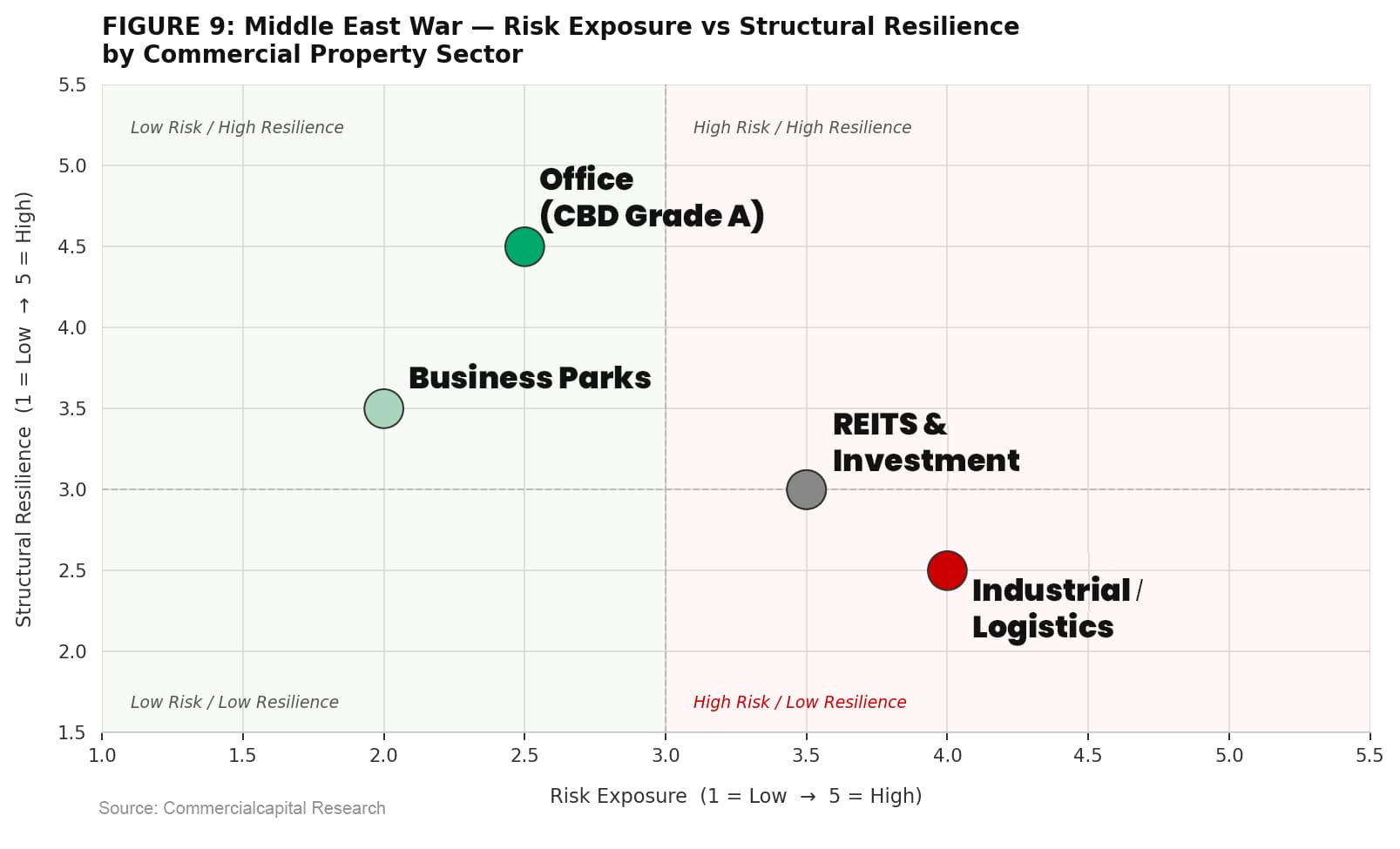
| Sector | Key Risk | Key Resilience Factor |
|---|---|---|
| Office (CBD Grade A) |
Occupier caution; delayed expansion |
Safe-haven HQ demand; tight supply |
| Prime Retail |
Consumer inflation; softer discretionary spend |
Tourism pipeline; F&B resilience |
| Industrial / Logistics |
Fuel cost squeeze; trade volume risk |
Strong pre-existing demand; limited supply |
| REITs & Investment |
Rate tightening risk; yield compression |
Institutional demand; quality asset scarcity |
What Comes Next: 2026 and Beyond
The near-term outlook is constructive but more cautious than it was three months ago. Office rental growth of 3–5% remains the base case for 2026, supported by falling vacancies and a constrained supply pipeline. The market will remain tight through 2027, with significant new supply only expected from 2028 onwards.
The Middle East conflict introduces a genuine fork in the road. In a resolution scenario, oil prices normalise, inflation pressures recede, and Singapore's commercial property market resumes its pre-war trajectory with minimal disruption. In a prolonged conflict scenario, sustained inflation and tighter monetary policy could shave 1 - 2 percentage points off rental growth forecasts and dampen investment volumes.
What remains constant in either scenario is Singapore's fundamental appeal. Its political stability, rule of law, deep talent pool, and strategic position as ASEAN's financial and logistics hub make it the natural destination for businesses seeking a safe, efficient base in an uncertain world. If anything, the current global turbulence reinforces rather than undermines that proposition.
This report is prepared for informational purposes. Data points are interpreted from URA official statistics, CBRE Research, and broader market analysis, and should not be taken as investment advice.